Auto Industry Shift

Declan Kennedy
| 09-06-2026
 · Vehicle Team
Hello Readers! Have you noticed how quickly the idea of “driving a car” is changing? Not long ago, the focus was on horsepower, fuel efficiency, and design.
Today, the conversation has shifted toward software updates, battery chemistry, charging networks, and even whether a car needs a driver at all.
The automotive industry is no longer just about manufacturing vehicles—it is becoming a complex ecosystem of energy, data, and intelligent systems. This transformation is exciting, but it is also unsettling for many manufacturers, suppliers, and consumers who are still adjusting to the pace of change.
Electrification: The Race Beyond the Engine
Electric vehicles are no longer a niche experiment; they are rapidly becoming mainstream across major markets. However, the transition is far from simple. Battery technology remains one of the biggest constraints. While lithium-ion chemistry continues to improve, manufacturers are still balancing three competing demands: cost, range, and safety.
Lithium iron phosphate (LFP) batteries are gaining popularity for their durability and lower cost, while solid-state batteries are being positioned as the next breakthrough—though large-scale production is still in development. Infrastructure is another bottleneck.
Urban centers in Europe and parts of China are expanding charging networks aggressively, but many suburban and rural regions worldwide still struggle with limited access. Fast-charging stations exist, yet long-distance travel anxiety remains a real concern for many drivers.
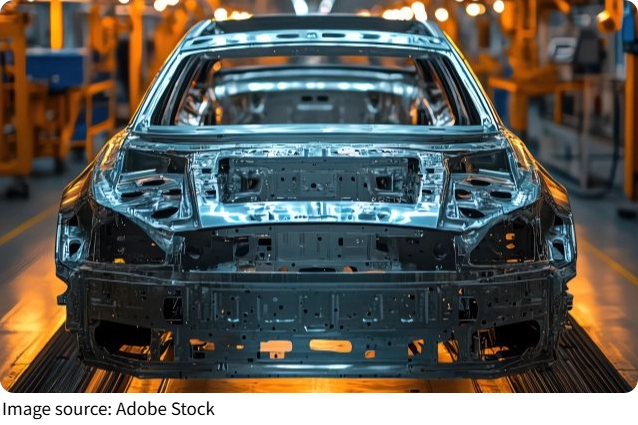
At the same time, automakers are under pressure to redesign entire vehicle platforms around electric architecture rather than simply replacing engines with batteries. This shift requires billions in investment and a complete rethink of manufacturing lines.
Supply Chains Under Pressure: Lessons from Recent Disruptions
The semiconductor shortage exposed a fragile truth: modern vehicles depend on thousands of chips controlling everything from braking systems to infotainment screens.
When supply chains stalled in recent years, production lines across multiple continents came to a halt, revealing how deeply interconnected the industry had become. In response, manufacturers are no longer relying solely on single-source suppliers or concentrated production hubs.
We are now seeing a strategic shift toward “regionalization.” Companies are expanding production in Mexico, Southeast Asia, and Eastern Europe to reduce dependency on any one geography. Some automakers are even signing long-term contracts directly with chip manufacturers to secure priority access.
Logistics strategies are also evolving. Instead of just-in-time delivery models, many companies are now maintaining larger buffer inventories to withstand future shocks.
The Rise of Software-Defined Vehicles
Today’s modern cars are increasingly closer to rolling computers than mechanical machines. Connected systems allow vehicles to receive over-the-air updates, improve performance remotely, and offer personalized driving experiences. But this connectivity introduces new vulnerabilities.
Cybersecurity has become a serious concern. Industry studies suggest that modern vehicles may contain tens of millions of lines of code, spanning infotainment systems, navigation tools, and safety controls. Each digital entry point becomes a potential target for malicious attacks if not properly secured.
Data privacy is another sensitive issue. Vehicles now collect behavioral data such as driving patterns, location history, and user preferences. The question is no longer just “what can a car do?” but also “who controls the data it generates?” As a result, automakers are investing heavily in in-house software teams, cybersecurity divisions, and partnerships with technology firms to build more secure digital ecosystems.
Autonomous Driving: Between Promise and Reality
Self-driving technology continues to attract enormous attention, but full autonomy is still not a universal reality. Most systems today operate at partial automation levels, where the car assists but does not fully replace the driver. Advanced driver-assistance features such as lane keeping, adaptive cruise control, and automated parking are becoming common, yet they still require human supervision.
The biggest challenges remain regulatory uncertainty and unpredictable real-world environments. Weather conditions, complex urban traffic, and ethical decision-making in edge cases continue to slow full deployment. Some companies have successfully launched limited robotaxi services in controlled environments, but scaling these systems globally is a far more complex challenge than initially expected.
Environmental Responsibility: Beyond Emissions Reduction
The industry is also under growing environmental scrutiny, and the focus is expanding beyond tailpipe emissions. Manufacturers are now being evaluated on the full lifecycle impact of their vehicles—from raw material extraction to battery disposal. This has pushed companies to explore recycled aluminum, low-carbon steel, and second-life battery applications.
Battery recycling, in particular, is becoming a critical priority. Recovering lithium, nickel, and cobalt from used batteries not only reduces environmental impact but also helps stabilize supply chains. Governments are tightening regulations as well, encouraging cleaner production methods and setting stricter targets for carbon neutrality. This is forcing automakers to rethink factory energy sources, logistics emissions, and even supplier standards.
New Business Models: Cars as Services, Not Just Products
Ownership is no longer the only way people access vehicles. Subscription-based models are emerging in several markets, allowing users to switch between different vehicle types without long-term commitment. While early attempts faced resistance due to pricing complexity, the concept continues to evolve.
Mobility-as-a-service platforms are also gaining traction in urban areas, combining ride-hailing, car-sharing, and public transport integration into unified systems. For younger generations especially, convenience is often more important than ownership. Fleet electrification is another fast-growing segment, as delivery companies and logistics providers transition to electric vans and trucks to reduce operating costs and meet sustainability goals.
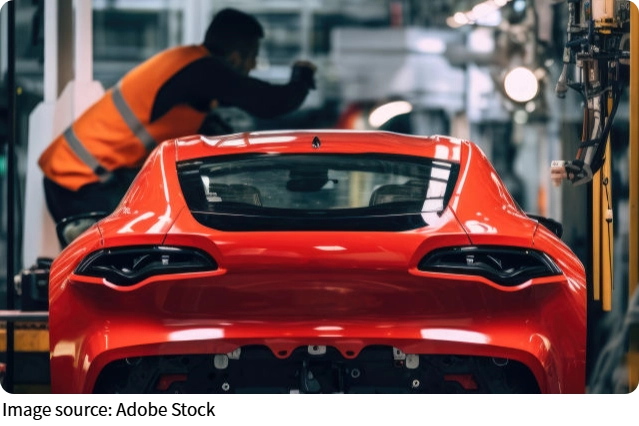
The automotive industry is not simply evolving—it is being rebuilt from the ground up. Electrification, digital transformation, supply chain restructuring, and environmental accountability are all converging at the same time. For manufacturers, the challenge is not just innovation, but coordination across technology, regulation, and consumer expectations. For drivers, the meaning of mobility is expanding beyond transportation into a connected, data-driven experience.